Last year, I wrote about my experiences of World Book Day as a child. I relived the scene of a sea of Jacqueline Wilson costumes and discussed how everyone should dress as their favourite character, regardless of whether they are known to their fellow classmates. A year on, on this wintry World Book Day, my boyfriend is currently completing his teacher training, and I felt the mad rush of assembling a last minute fictional attire as he turned his head to myself and his flat mate at 11pm last night to say: Oh, it’s World Book Day tomorrow and I need a costume. What’s the plan guys?
Somehow, this issue of his had now become a collective problem that needed a solution. After bouncing some ideas back and forth, our first instinct was naturally to go towards the hero that is Roald Dahl. As the world’s number one bestseller, and with some amazing, bright, and highly infectious characters to choose from, of course our minds would divert towards the inventor of James and his Giant Peach. Yes, and so did my boyfriend’s. Except instead of being one character, he wanted to be two.
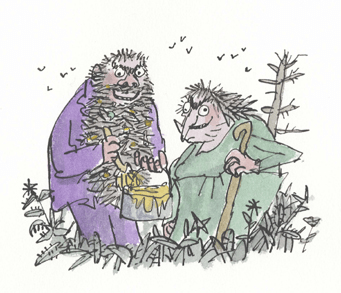
He wanted to be both Mr and Mrs. Twit. One side a bearded, dirty man, the other side an equally repulsive woman. If either of them can be called a man or a woman, that is.
 From this experience, I utterly understand this one, admittedly tiny, part of parenting and the stress and negotiating skills that goes with it. Once realising the unrealistic aspect of his idea, due to our limited time and materials, we settled with making him Rupert the Bear. He looked adorable and brilliant (kudos to Lauren for the cotton pad bear ears).
Yet, this got me thinking. I understand that Roald Dahl is mostly known for his children’s tales, ranging from George and the Marvelous Medicine to Matilda, but enjoying his compelling style, wildly mischievous characters and his undoubtedly original ideas doesn’t need to stop there. Dahl also wrote prolific stories for adults which were of the more sinister, chilling kind, yet equally as thought provoking as his tales for younger readers. Writing short stories in publications such as The New Yorker and Kiss, Kiss, Penguin drew these stories and published Dahl’s adult tales in a series of books (2016), titling each collection to reflect the nature and themes of the stories themselves. The first book of Dahl’s short stories that I have read is called Madness: Tales of Fear and Unreason, and I would highly recommend it for these reasons:
- It’s Roald Dahl. You know they are good because this is the man that invented oompa loompas for crying out loud. The only way you would get on board which such bizarre a concept as little orange people with green hair was if the way it is written was compelling and engaging. Although these stories are engaging in a different way, i.e. let’s put it this way, you ain’t exactly going to be laughing and singing along, these stories, if anything, make me respect his craftsmanship as an author more due to his diversity in storytelling. I simply couldn’t put it down.
- The stories are short, funnily enough. It is a perfect little read and you have a new story line to follow everyday, saving you from getting bored or feeling tedious following the same characters. No prior knowledge is needed, so you can dip into the next tale for a night time read, or while you wait for you cake to bake (yes, that example is an accurate representation of me, myself and I). However, I don’t think I’d recommend reading them before bed because…
- The endings and plot twists are unreal. Legit, some of the endings left me unable to move for a little bit. They are so unpredictable and, excuse the pun, mad. You think that the story is going to go one way and then it does a complete 180, often for an outcome that is so much worse than you could ever have comprehended. One of the stories, William and Mary, reminded me of the Black Museum episode in the latest Black Mirror series. Some of the of endings are stunningly beautiful, like in Katina, and others leave you stunned. Sort of like the outcomes of the children leaving Wonka’s Chocolate Factory.
- All the stories are vastly different and make you think. If you have read some of my previous posts, I think you know I like a book that makes me think differently. Every story is diverse regarding where it is located in the world, the age/race/gender of the protagonists, and the crisis or situation the characters find themselves in. From jumping off a cruise boat to win a bet, to fighting in a war as a pilot in Greece, to a vegetarian eating pork for the first time, the variation is staggering. The way the characters reach their conclusions and the lessons that can be learned from the stories echo Dahl’s children’s literature but on a more detrimental and gloriously real scale.
- Finally, the stories are still funny. In a dark way. You know those times where your friend falls over but you end up laughing before checking whether they are okay and you feel like the devil? Whenever someone has an unfortunate fate, Dahl writes in such a way you end up gently smirking or feeling slight giggle from within. You feel guilty, but you can’t help it. Who doesn’t like a bit of dark humour?Dahl perfectly shapes his storytelling so the joke continues on as you grow older. Truly, the magic continues on forever.
Before school breaks out, I’ll leave it there. I would give Dahl’s book Madness: Tales of Fear and the Unknown a 9/10, and I would recommend you read it. There are more collections in the series which I am eager to try, such as Cruelty, Deception and Lust, so even if you don’t begin with Madness, try the others.

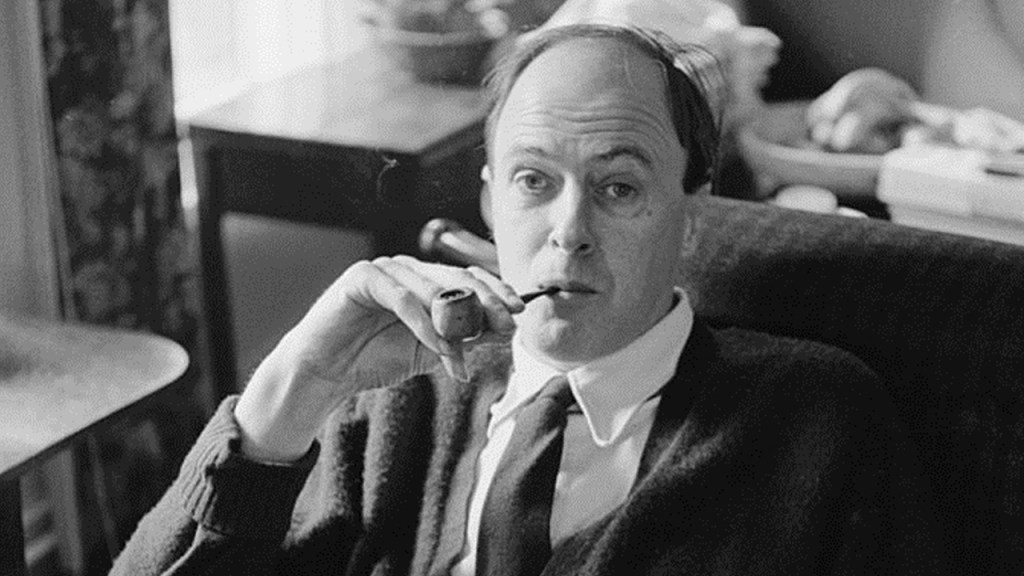
I think this hopefully proves that Roald Dahl is a champion of not only children’s literature but literature for everyone. Regardless of whether you are an adult or not, we can forever enjoy his tales, whatever age we are and whichever of his books we decide to pick up. As the man himself says:
A little nonsense now and then, is cherished by the wisest men.
Happy reading!
Hev xo
 Heather Evans Editorial
Leave a comment