
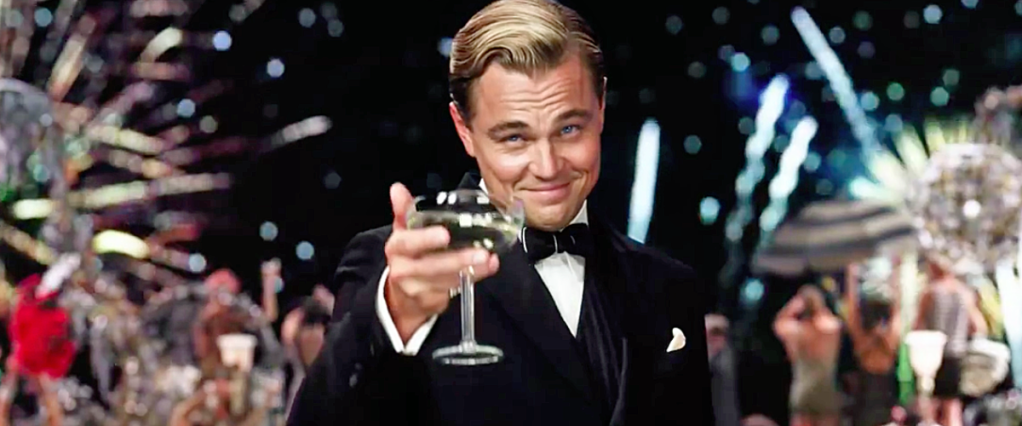
Guys, I lasted 4 days.
As soon as I went to bed on New Years Day at approximately 4:00am, which was after walking around unsuccessfully for a McDonalds for 30-45 minutes, I vouched that this year I would keep January a dry one. Not that I feel like I drink too much, but with Christmas celebrations now being pass I liked the idea of a challenge and possibly the little health kick. Pfft, I’m basically a grandma now and I no longer live in a pub – of course these 4 weeks will fly by..
I was incredibly naive.
Let’s set the scene. It’s Friday. I can’t wait to get home from work to relax in my dressing gown and play Articulate, and I can already sense the jealousy you as the reader are feeling as I lay out my exciting plans. But they are about to get even more exciting.
My phone blows up with this news that my housemates are buying gin and tonic.
I’m sat during my lunch break even more eager to go home and play Articulate with the gang because, truly, the only way to improve the already BRILLIANT game of Articulate is too add a few beers in there, right?
But, my bubble was burst. I laid a law to myself that I wasn’t drinking, and I faltered at the first hurdle. My first thought was G & T, not T-total. Oops.
I have kinda already given you the spoiler that I did drink in the end. I was with friends and, as much as I know you don’t need alcohol to enjoy yourself with great company, I think my drink was well deserved. Also, it is arguable that you 100% need a drink to immerse yourself into the unique experience that is Sin.
However, it did get me thinking. I find a glass of the ole’ vino helps me to wind down and sometimes write, so what famous writers were either alcohol dependent or enjoyed a cheeky vodka to help their creativity, pain and emotion flow from their heads onto the page? After doing some research, some writers are famously known to be drinkers, but there were some that genuinely took me by surprise. Considering I only lasted the first 4 days of 2018 without a beverage, it seems fitting that I list 4 writers whom knocked back some bevs along with a book of theirs that is worth a read. Here we go..
F. Scott Fitzgerald
‘First you take a drink, and then the drink takes a drink, then the drink takes you’
Alright, let’s start with the obvious one. It is famously known that Fitzgerald, the writer of The Great Gatsby, throughout his life relied on drink. Never graduating from Princeton, he cannot be described as an ideal student and his obsession with becoming a rich socialite preoccupied his literature as well as his life. Like many of his characters, his wife, Zelda, and himself lived double lives: one for the public eye, and one for close friends and themselves alone. He received criticism from friend, author and fellow alcoholic Ernest Hemingway for not being able to hand his beer ‘like a man’, and, much like how alcohol oozes out of the pages of his stories, the liquid poison leaked out into his public life. Alcohol was the cause of his death, aged 40.
One of my favourites by Fitzgerald is his novel, Tender is the Night. Regardless to whether it is an autobiographical allusion to his own marriage and Zelda’s schizophrenia, I really love the twisted and somewhat immoral doctor-patient relationship of Dick Diver and Nicole. It is decadently written and, much like in The Great Gatsby, things are never as they seem behind closed doors.
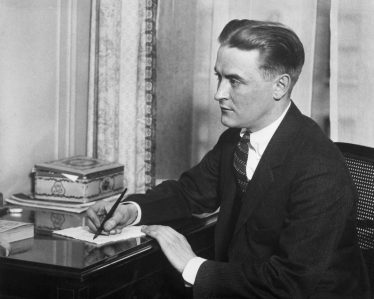
Dorothy Parker
‘I’d rather have a bottle in front of me than a frontal lobotomy’
The quote above, I think, demonstrates why Dorothy Parker is remembered predominantly for her wit as well as her criticism, poetry, writing and screen plays. Again, she didn’t have the best of childhoods. Her mother died before Parker turned 5 and she had a persistent and turbulent relationship with her father and step-mother, whom had both died by the time she turned 20. However, she sold her first poem to Vanity Fair by the age of 21 and became an editorial assistant to Vogue in the same year. She poured literary output to The New Yorker and was a founding member of the Algonquin Round Table; a group of newspaper journalists who published her witty remarks that claimed her reputation as a ‘wisecracker’. Her career in later years moved towards screenplays, but with friends like Fitzgerald and Hemingway and marriages that can described as ‘drunken love’, it isn’t surprising she battled with depression and alcohol throughout her life. Unlike Fitzgerald, she died of a heart attack aged 73.
The poem which, in my opinion, illuminates Parker’s satirical tone is her poem, The Interview. In this poem, Parker is digging at the perception of the ‘ideal woman’ and how it is all a farce – women are simply pretending to fit men’s bill. Feminism is cool.
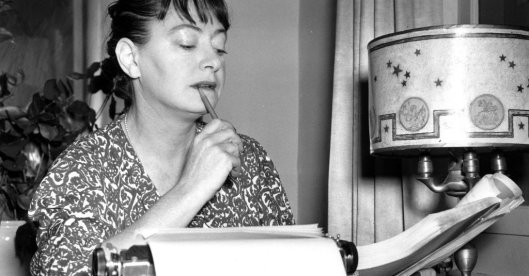
Maya Angelou
‘I keep a dictionary, a thesaurus, a bible, a deck of playing cards, a bottle of sherry, and stacks of yellow sticky pads’
Maya Angelou is a name is that is golden. As an activist, feminist, former sex worker, writer, mother and inspiration to all, she used her own difficult experiences to help others overcome theirs. Her autobiographical fiction, I Know Why the Caged Bird Sings (1969), illuminated her into the spotlight of acclaim and recognition, and throughout her life became a spokeswoman for black rights and civil moments. Working with Martin Luther King Jr and receiving more than 50 honorary degrees for her written and active work, it is no wonder the woman enjoyed a sherry. It is famously known she drank the substance when writing and, although she wasn’t an alcoholic, the beverage was as important to her as her bible. Fair play.
I would suggest reading I Know Why the Caged Bird Sings because it is astounding, but her famous poem she read at Bill Clinton’s inauguration On the Pulse of the Morning is equally as breathtaking. 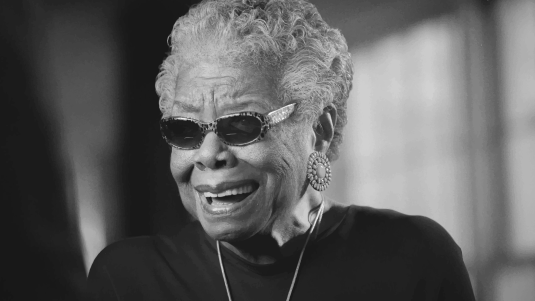
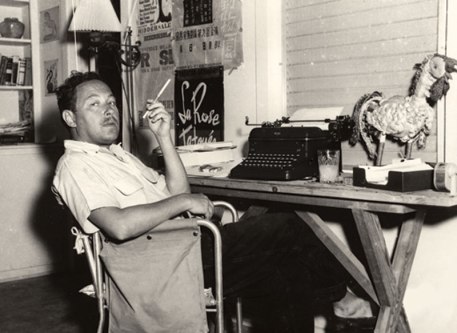
Tennessee Williams
‘I’ve had a wonderful and terrible life and I wouldn’t cry for myself, would you?’
Finally, let’s talk about one of my all time favourite playwrights. The common theme with these writers is that they didn’t have the greatest time as children, and the case is the same for this guy. It is said that he used his own dysfunctional family to inspire most of his plays. His parents had an unhappy marriage that usually involved fists, and with Williams suffering from diphtheria at a young age he didn’t live up to the expectations his father had for a masculine son. Although he had roaring success in the 1940s with his plays The Glass Menagerie, A Cat on a Tin Roof and A Streetcar Named Desire, he unfortunately suffered with crippling anxiety that led to his drug and alcohol abuse in the 60s. This may be due to the death of his partner, Frank Merlo, as he got sectioned for 3 months pretty much straight after his death. He died by choking on a medicine cap he accidentally swallowed, aged 71.
Anyway, my favourite play of his is The Glass Menagerie. It is beautifully written, has lots to comment on regarding privacy and the limits of familial love, and the main protagonists being female is a nice change. I would highly recommend it.
That’s it, then. In short, it seems that some of the greatest writers drank some alcohol, so it can’t all be that bad if I decide, actually, I like a glass of wine.
Happy reading,
Hev xo
 Heather Evans Editorial
Leave a comment